Training climate specialists

01Research school “Terrestrial Ecosystems under Climate Change”
Held at Sirius University of Science and Technology on 13–17 May 2025. It brought together more than 40 students and postgraduates from across the country researching the impact of global and regional climate change on terrestrial ecosystems.
03Programme for young professionals “International Climate Diplomacy”
A professional retraining programme running from August to November 2025. It builds a national talent pool of young climate experts who master the international and diplomatic dimension of climate science and are ready to present and defend the country’s science-based position at top-level international negotiations.
Supported by Gazprombank (JSC) with the participation of the Russian Ministry of Foreign Affairs, MGIMO, the Yu. A. Izrael Institute of Global Climate and Ecology, the BRICS Youth Energy Agency, the UN Global Compact and other expert partners.
05International Olympiad on Climate and Ecology (IOCE)
The second Olympiad takes place on 13–20 September 2025 as an interdisciplinary scientific competition combining individual and team rounds with a field session in Sochi National Park. Participants are high-school students aged 14–18 from different countries interested in environmental conservation and restoration.
07Youth Climate Week, 10–15 November 2025
A major international research and education event for students and young scientists, comprising three research schools:
- “The Earth’s Climate System: Diagnostics, Modelling and Forecasting” (with the RAS Institute of Numerical Mathematics, the RAS Institute of Atmospheric Physics and Lomonosov Moscow State University);
- “Artificial Intelligence in Climate Science” (with the Sirius University Research Centre for Information Technology and Artificial Intelligence);
- “Oceans and Climate Change” (with the P. P. Shirshov Institute of Oceanology, RAS).
The final module of the “International Climate Diplomacy” programme with foreign experts takes place at the same time (supported by Gazprombank).
09Master’s programme “Geoecology: Monitoring, Forecasting and Management”
The first intake is in September 2025. The programme provides practical training for highly qualified researchers able to carry out comprehensive geoecological studies, assess the state of the environment and develop science-based forecasts of ecosystem change under natural and human impact.
02School-conference “Future of Cities”
Held on the Sirius Federal Territory on 21–24 June 2025 for students and young scientists from all over Russia. During the four-day intensive they attended lectures, project sessions and discussions with leading experts in urban design and planning — urbanists, architects, urban greening specialists and urban ecologists — and developed projects for the urban environment of the federal territory.
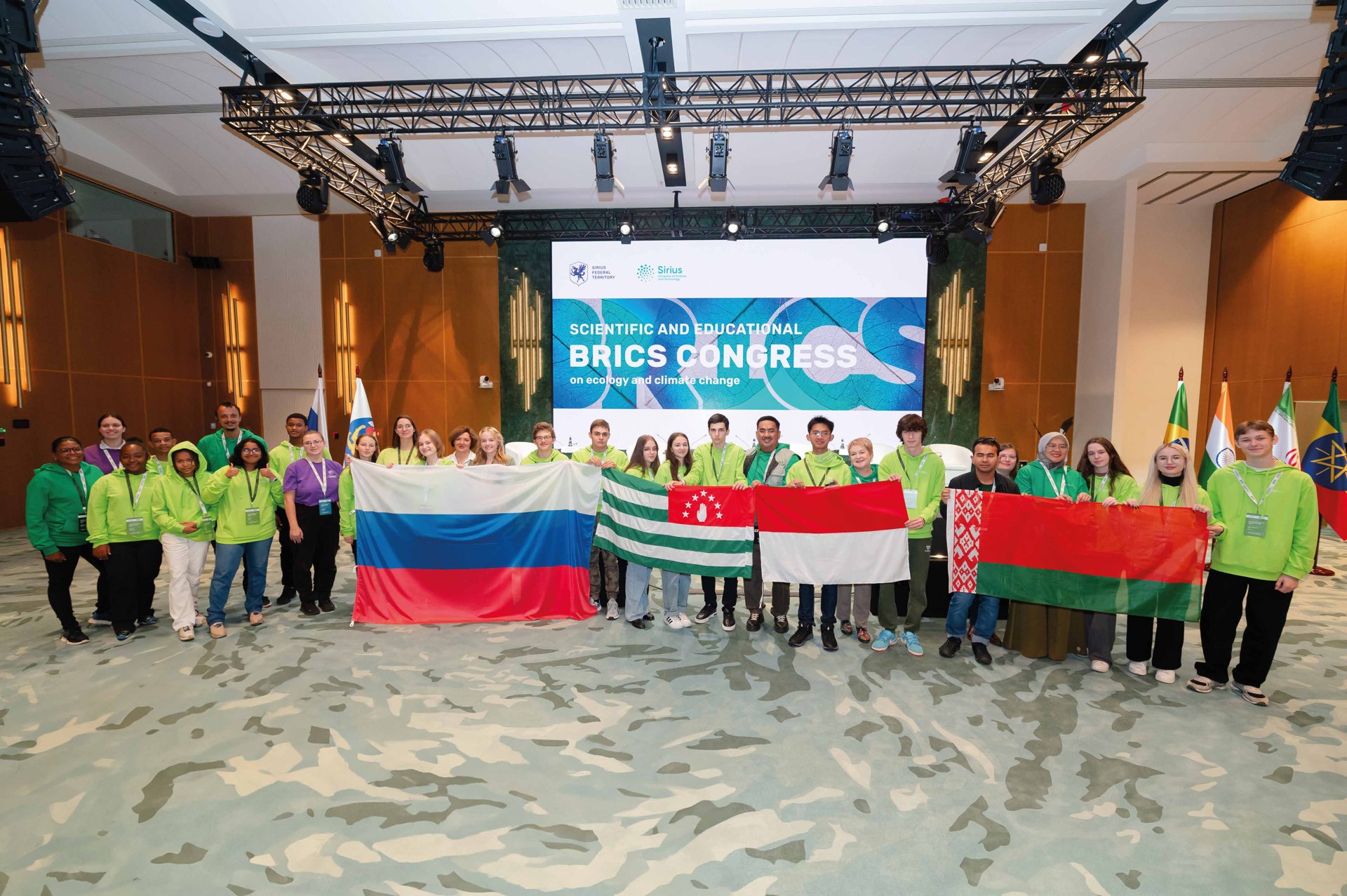
04Big Challenges programme: “Ecology and Climate Change Studies” track
For the second year running, this new track of Sirius’s flagship programme has been among the leaders in applications: more than 60 per place in 2024 and more than 70 in 2025.
During the summer session on 1–24 July 2025, students worked on six projects from leading industrial and academic partners, tackling permafrost monitoring, ecosystem greenhouse gas fluxes, decarbonisation strategies and technological innovations in environmental quality assessment.
06International Conference on Ecology and Climate Change, 14–16 September 2025
Conceived as a leading platform for sharing scientific knowledge, bringing together scientists, experts, government, business and NGOs from BRICS and other interested countries. It addresses pressing environmental and climate challenges with a focus on regional specifics and the priorities of partner states.
08School-conference “Think Deeper”
Held on 26–28 November 2025 as part of the Congress of Young Scientists for alumni of the national Floating University programme (2017–2025). Organised since 2024 together with the Floating University Coordination Centre at MIPT.
10PhD programme in Geoecology
In October 2025 the Research Centre welcomes its second cohort of PhD students to study and conduct research within its scientific teams.

Research projects
01Black Sea research
In 2025 staff of the International Research Centre for Ecology and Climate Change continue marine research and take part in expeditions:
- coastal studies near Gelendzhik and Anapa (June 2025, with the RAS Institute of Oceanology);
- a survey of the south-western coast of Crimea and the Caucasian Black Sea coast (6 September — 4 October 2025, with the RAS Institute of Biology of the Southern Seas).
03Carbon cycle of subtropical terrestrial and freshwater ecosystems in the coastal and mountain clusters
Researchers continue to study the carbon balance of subtropical ecosystems affected by global climate change. A baseline carbon balance model of local ecosystems is a necessary step towards carbon neutrality of the federal territory.
05Engineered soils (technosols) for the Sirius Federal Territory
In autumn 2025 construction begins on a soil research station to create soil structures of various compositions and ensure optimal conditions for plants in the green areas of the Sirius Federal Territory.
07Biological resources of recreational and tourist complexes: studying, preserving and developing plant communities
Together with the Sirius University Centre for Genetics and Life Sciences and the Federal Territory Parks agency, research continues into plant biodiversity of the federal territory and adjacent areas. The aim is to preserve and restore the gene pool of rare and endangered plants.
09Preserving natural heritage under climate change and growing human pressure
New approaches to assessing natural ecosystems and preserving the biodiversity of the Black Sea region and the western slopes of the North Caucasus to ensure a healthy environment and environmental security of Russia:
- study of the main trends in climate change and forest ecosystem development, including dendrochronology (records of 400+ years);
- assessing the carbon uptake capacity of plant species to create a catalogue of sequestering plants;
- defining optimal levels of recreational load on the natural environment;
- developing methods for propagating and preserving rare, endemic, valuable native and introduced plants to conserve regional biodiversity.
02Geohazard monitoring system for the Sirius Federal Territory and adjacent areas
Work continues on a network of ground-based seismological monitoring stations in the coastal and mountain clusters. In 2025 the programme was expanded with new hydro-gas-geochemical studies. This integrated system will make it possible to assess the risks of landslides, mudflows and other geological processes in advance.
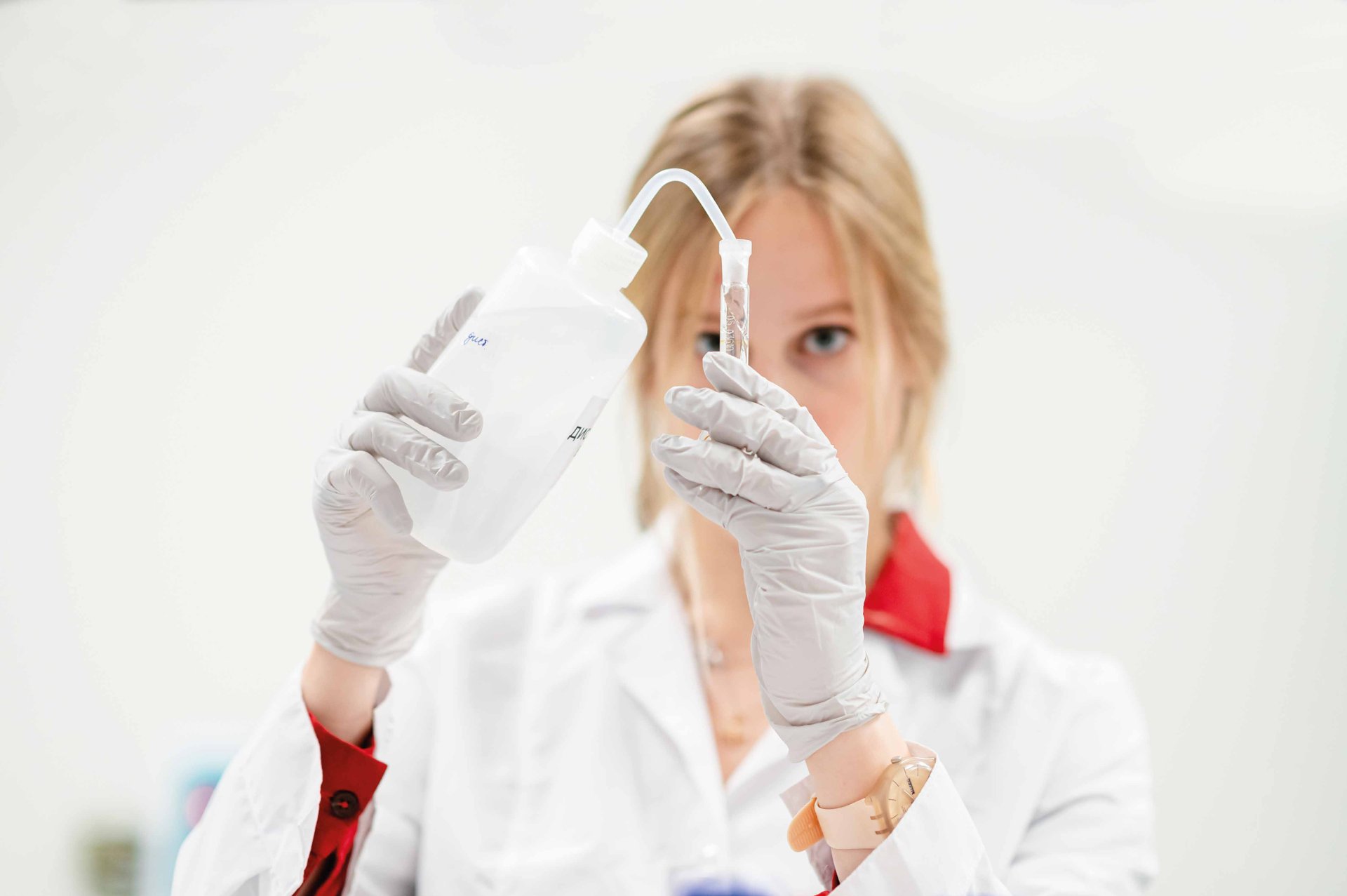
04Environmental monitoring of the Sirius Federal Territory and adjacent areas
- air quality monitoring in cooperation with Roshydromet;
- studies of how small-river runoff affects coastal waters near the Sirius Federal Territory, and assessment of the impact of oil spills in the Black Sea.
06Cultivating strains and developing new biodegraders for bioremediation of oil-contaminated soils
Together with the Sirius University Centre for Genetics and Life Sciences, scientists are studying oil bioremediation — the ability of bacterial consortia to break down petroleum products. An experiment has shown that within 28 days special bacteria reduce the hydrocarbon content of a fuel-oil medium by 32%, and this is not the limit. Next come additional hypotheses, scaling-up and field trials.
08Guidelines for climate projects in the reconstruction of existing parks
…and the creation of new parks in the urban area of the Imereti Lowland (within the Sirius Federal Territory), taking into account the ecological state of the landscape.
Scientists will propose new methodologies for climate projects based on blue-green infrastructure of urban areas.
Expert activities
On the instructions of the President of the Russian Federation, in 2025 the Centre is completing an analytical report on the implementation of state strategic initiatives related to climate research and the creation of a unified national system for monitoring climate-active substances.
The report will include proposals to improve the structure and practical mechanisms of the major innovative project of national importance “Unified National System for Monitoring Climate-Active Substances”.